
What Is a Balanced Lifestyle and How to Achieve It (Simple, Real-Life Guide)
What is a balanced lifestyle and how do you achieve it? Discover simple, realistic habits to improve your health, work-life balance, mental well-being, and daily routine.
WELLNESS
3/2/20264 min read
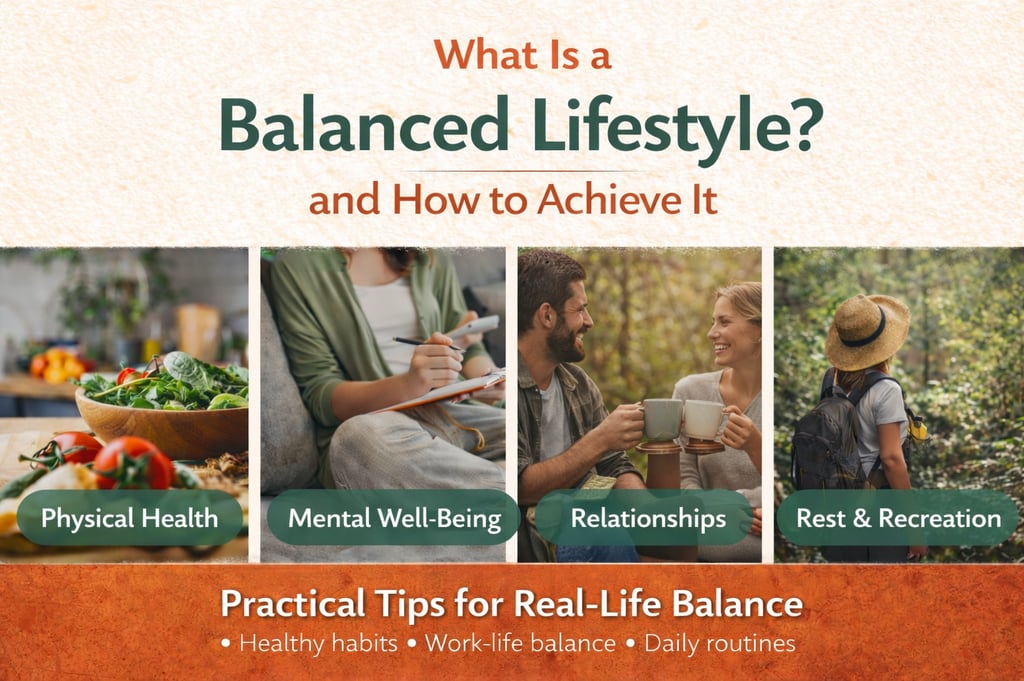
Modern life feels busy. Between work, family, responsibilities, and digital noise, many people feel stretched thin. That’s why more and more people are asking: What is a balanced lifestyle — and how do you actually achieve it in real life?
The good news? Balance doesn’t mean perfection. It means creating a lifestyle that supports your physical health, mental well-being, relationships, and personal goals — without constant burnout.
Let’s break it down simply.
What Is a Balanced Lifestyle?
A balanced lifestyle is a way of living where different areas of your life receive appropriate time and energy, including:
Physical health
Mental and emotional well-being
Work or productivity
Relationships
Personal growth
Rest and relaxation
It’s not about equal time for everything. It’s about intentional living — knowing what matters and adjusting when things feel off.
Why a Balanced Lifestyle Matters
Living out of balance often leads to:
Chronic stress
Fatigue
Poor eating habits
Reduced productivity
Emotional burnout
When your life feels balanced, you typically experience:
More energy
Clearer thinking
Better sleep
Stronger relationships
Greater satisfaction
Balance creates sustainability — and sustainability creates long-term wellness.
The 5 Core Areas of a Balanced Life
1. Physical Health
Your body is your foundation.
Simple ways to support it:
Regular movement (walking, stretching, strength training)
Nutritious, home-cooked meals
Hydration
Quality sleep
You don’t need extreme diets or intense workout programs. Consistency matters more than intensity.
2. Mental and Emotional Well-Being
Mental balance is just as important as physical health.
Support it with:
Daily quiet time
Journaling
Reading
Mindfulness or prayer
Reducing social media overload
Even 10 minutes of intentional calm each day can improve emotional stability.
3. Work-Life Balance
Work is important — but it shouldn’t consume your entire identity.
Healthy work-life habits:
Clear work hours
Scheduled breaks
Time away from screens
Saying “no” when necessary
Balance means being productive without sacrificing your health or relationships.
4. Relationships and Social Connection
Humans thrive on connection.
Make time for:
Family dinners
Outdoor activities
Phone-free conversations
Shared hobbies
Even small, consistent connection moments create deeper bonds.
5. Rest and Recreation
Rest is not laziness. It’s necessary.
Balanced lifestyles include:
Proper sleep
Weekend relaxation
Time in nature
Creative hobbies
Fun experiences
If you constantly feel guilty for resting, that’s a sign balance may be off.
How to Achieve a Balanced Lifestyle (Step-by-Step)
Step 1: Evaluate Your Current Routine
Ask yourself:
Where do I feel overwhelmed?
What area feels neglected?
What drains my energy?
Awareness is the first step.
Step 2: Set Realistic Priorities
You cannot optimize everything at once.
Choose:
One health habit
One mental wellness habit
One relationship habit
Start small.
Step 3: Create Simple Daily Anchors
Instead of complex schedules, create anchors:
Morning stretch
Evening screen-free time
Weekly meal prep
Sunday reset routine
Small routines create stability.
Step 4: Reduce What Doesn’t Serve You
Balanced living often requires removing things:
Excess social media
Unnecessary commitments
Toxic relationships
Over-scheduling
Balance is as much about subtraction as addition.
Step 5: Reassess Regularly
Life changes. Your balance will shift.
Check in monthly:
Do I feel energized?
Am I sleeping well?
Am I present with loved ones?
Adjust as needed.
Signs You’re Living a Balanced Lifestyle
You likely have good balance if:
You sleep 7–8 hours regularly
You don’t feel constant burnout
You have time for hobbies
You feel emotionally stable most days
You can handle stress without crashing
Balance doesn’t mean zero stress — it means manageable stress.
Common Myths About Balanced Living
Myth 1: Balance means doing everything perfectly.
No — balance is flexible.
Myth 2: You need a strict schedule.
Not necessarily. Structure helps, but freedom matters too.
Myth 3: Balance looks the same for everyone.
It doesn’t. Your lifestyle balance depends on your season of life.
Tools That Support a Balanced Lifestyle
These simple tools can help:
Daily planners
Habit trackers
Meal prep containers
Blue-light blocking glasses
White noise machines for better sleep
FAQs: What Is a Balanced Lifestyle and How to Achieve It
What does a balanced lifestyle mean?
It means managing your health, work, relationships, and rest in a way that supports long-term well-being.
How do I start living a balanced life?
Start by evaluating your routine and improving one small habit at a time.
Is work-life balance the same as a balanced lifestyle?
No. Work-life balance is one part of overall lifestyle balance.
Can a balanced lifestyle reduce stress?
Yes. Balanced routines help prevent chronic stress and burnout.
How long does it take to create balance?
It’s ongoing. Small improvements over weeks and months lead to lasting change.
A balanced lifestyle is not perfection, it’s not rigid control, and it’s not about doing more.
It’s about living in a way that supports your health, protects your peace, and allows you to enjoy the everyday moments — whether that’s cooking at home, spending time outdoors, or simply resting without guilt.
Start small. Stay consistent. Adjust when needed.
Balance is built — not found.
This post may contain affiliate links and I may receive a commission for purchases made through links.






Contact us
mabeeze@mabeeze.com
© 2025. All rights reserved.