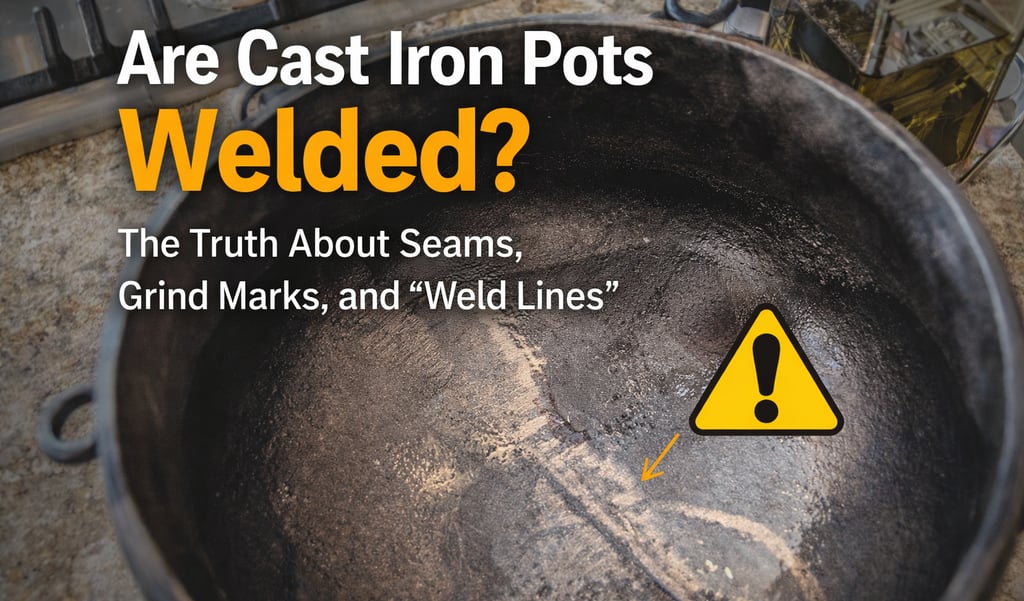
If you’ve ever looked inside a new cast iron pot and spotted a straight line across the base, you might have wondered: Was this thing welded together?
It’s a common concern — especially if you cook over open fire or use a traditional potjie. Let’s clear it up.
Short Answer: No — Cast Iron Pots Are Not Welded Together
Quality cast iron cookware is cast in a single piece, not welded from two halves.
Molten iron is poured into a sand mold shaped like the pot. Once it cools and solidifies, the mold is broken away and the pot is cleaned and finished. That’s it. No joining two pieces. No structural welding seams.
In fact, welding cast iron is difficult and expensive. It requires special techniques and controlled heating to prevent cracking. Manufacturers would not weld cookware unless they were repairing a defect — and that’s extremely rare in consumer products.
So Why Do Some Pots Have a Line Inside?
That visible line you’re seeing is usually one of these three things:
1. A Mold Parting Line (Most Common)
Sand molds are made in two halves. Where those halves meet, a slight ridge of metal can form. After casting, the excess metal (called flash) is ground down.
This can leave:
A straight line
Slight grinding marks
A subtle texture difference
It may look like a weld seam — but it’s not.
2. Grinding or Finishing Marks
Budget-friendly cast iron cookware often has minimal finishing. Instead of being heavily polished, the inside may show grind marks from smoothing the casting.
That’s cosmetic, not structural.
3. A Cold Shut (Less Common)
A cold shut happens when two streams of molten iron meet but don’t fuse perfectly smooth. It can look like a faint line. If it’s shallow and doesn’t go through the metal, it’s usually not a safety issue — though it may indicate lower quality control.
Could a “Weld” Pop or Crack Over Fire?
This is a fear we hear often.
But here’s the reality:
Cast iron expands and contracts as a single solid piece.
A true weld seam would be visible and irregular.
Welded cookware would be more prone to cracking — which is why manufacturers don’t make them that way.
If your pot were actually welded together, you’d likely see:
Uneven bead patterns
Different metal coloration
Visible joint lines on both inside and outside
That’s not typical in standard cast iron cookware.
What Is a Real Quality Concern?
Instead of worrying about welds, here’s what to actually check:
Deep cracks that run through the metal
Large pits or holes (porosity)
Rough sand inclusions
Warped base that doesn’t sit flat
Loose or weak handles
Those are genuine manufacturing issues.
A simple surface line? Usually normal.
Premium vs. Budget Cast Iron
Higher-end brands typically:
Grind and polish more thoroughly
Apply more consistent seasoning
Have smoother interior finishes
Budget brands may show more visible casting marks — but that doesn’t automatically make them unsafe.
It often just reflects the level of finishing.
Final Verdict: Should You Be Concerned?
In most cases, no.
If the line inside your cast iron pot:
Is straight
Feels smooth or slightly ground
Does not extend through the metal
…it’s almost certainly a casting parting line — not a weld.
Cast iron pots are designed to handle high heat, open flames, and decades of cooking. A cosmetic line inside the base doesn’t change that.
Want to Keep Your Cast Iron in Top Shape?
Make sure you:
Season it properly before first use
Avoid thermal shock (don’t pour cold water into a hot pot)
Dry and oil lightly after cleaning
With proper care, a good cast iron pot can last generations.
You might also like:
How to Reseason a Rusty Cast Iron Potjie (And Make It Last a Lifetime)
Must-Have Accessories for Potjie Cooking- Tools to Take Your Outdoor Stew Game to the Next Level
The Best Types of Pots for Campfire Cooking- From Dutch Ovens to Potjies
How to Cook Potjiekos in a Cast Iron Pot (Step-by-Step Beginner Guide)
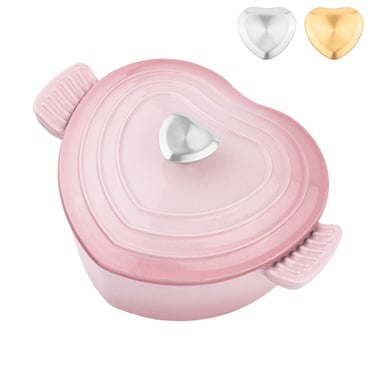
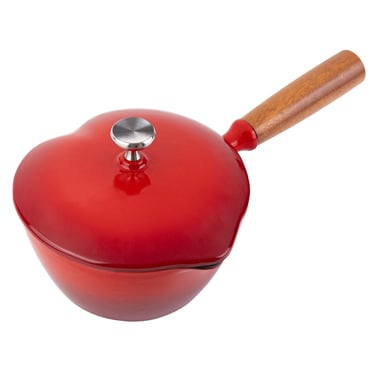
Heart-Shaped Enameled Cast Iron Dutch Oven
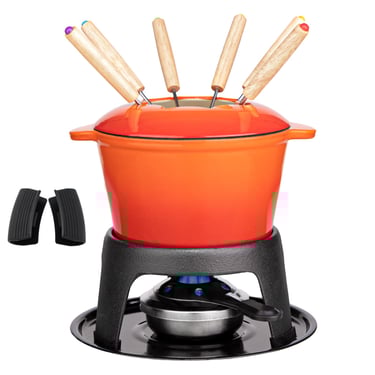
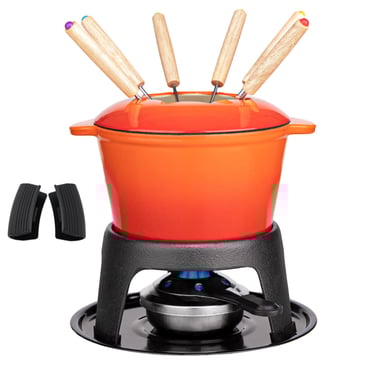
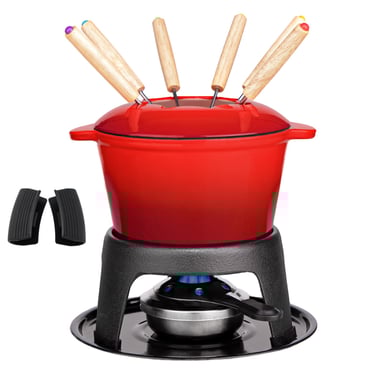
2-Quart Casserole Pot with Lid - Compatible with All Cooktops
Click on the images to buy cast iron cookware
1-Quart Red Enameled Cast Iron Mini Sauce Pot for All Cooktops